


No physical ticket, no problem.
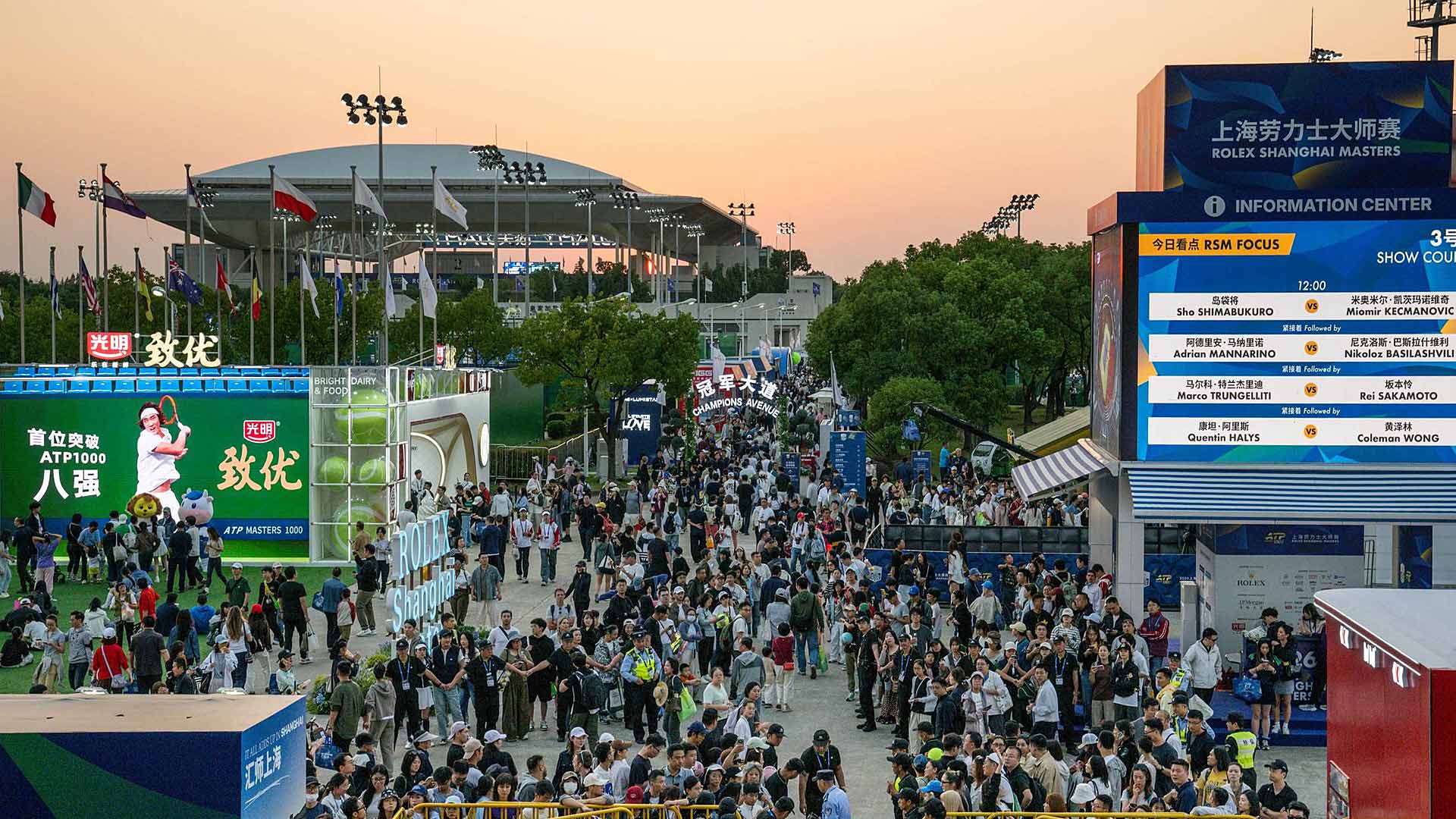
That’s my first impression of the Rolex Shanghai Masters as I pass through the entrance to the sprawling campus of the Qi Zhong Tennis Center.
As a Florida-based Australian coming to China for the ATP Masters 1000 tournament, I was expecting that in a country known for its tech-savvy culture, the tournament would serve up some technical efficiencies to remove friction from a day at the tennis.
Still, it’s pretty cool that you can spend your day at the tennis without having to produce a ticket. Just once, at the main entrance, you need to show photo ID as you enter and then the rest is a breeze. If you return on future days, you don’t even need your ID. Your face is your ticket.
And it doesn’t just get you onto the grounds. If you have paid for a seat in the 15,000-seat Qi Zhong Stadium, a second facial scan at the stadium entrance waves you through to your seat.
For a first-time visitor to China, that quickly became something of a theme. Shanghai may feel a long way from home, but navigating a day at the tournament is surprisingly straightforward. Signage is easy to follow, I found tournament staff and volunteers who spoke English, and my universal tennis instincts took care of the rest.
Well before I settled into one of the sport’s most iconic stadiums for the evening session, I wanted to spend a full day around the grounds.
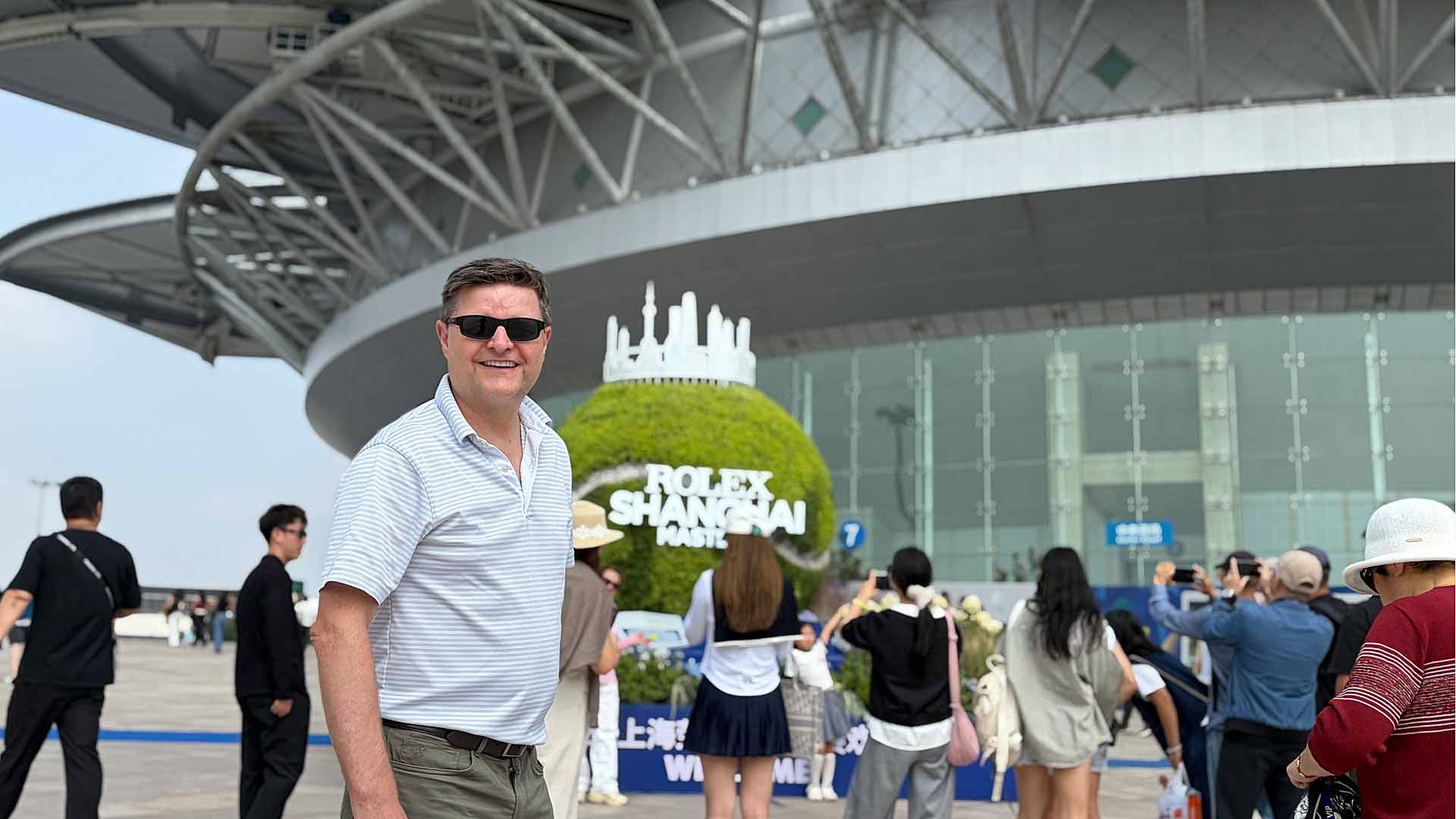
A spectacular welcome to the Rolex Shanghai Masters.
As someone with a one-handed backhand, I’ve always enjoyed watching Stefanos Tsitsipas. So after entering the grounds and taking a selfie in front of the Qi Zhong Stadium with its signature magnolia roof expanded, I headed left down Masters Avenue to Court 17, officially known as the Royal Caribbean Masters Practice Court.
Built last year for the sole purpose of giving fans a comfortable way to view players practising at close range, the court has seating for 1300. I caught the tail end of Stef’s practice and then stayed around to watch him hit with lucky fans using implements including a pickleball racquet, a frying pan and what looked like a wooden spoon with an extended handle.
While a good crowd was on hand to watch the Greek, I noticed at the end a surge of fans scurrying up the three court entrances to fill any remaining open seats. That made sense shortly afterwards when I saw Carlos Alcaraz walk on court to generous applause.
Before Carlos began to hit, I saw his physio warming up his wrist. I was pleased to see that, for a couple of minutes at least, Carlos and his hitting partner started off at three-quarter pace like most of us do. It was a dramatic contrast to when I watched Novak Djokovic practise a couple of days earlier. His hitting partner rocketed the very first ball of the session and away they went at full speed.
Admittedly, it didn’t take long for Carlos to hit full intensity. Watching from this close, you get a real sense for how hard the Spaniard clubs his shots.
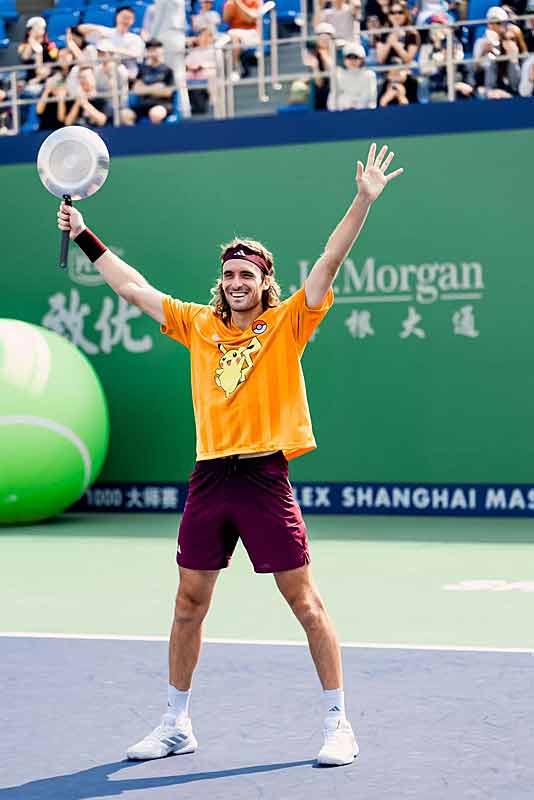
Stefanos Tsitsipas challenged fans while playing with a frying pan and wooden spoon.
It was a good thing that I stayed inside after Stef left the court because a long queue had formed to get in by the time the Alcaraz practice started. One fan in that queue held up a hand-drawn poster of the Spaniard. Most practice courts appear to have spaces set aside for queuing.
And that was when something else struck me. Change the language on the signs and I could have been at Indian Wells, Rome or Cincinnati. Fans were checking practice schedules on their phones, rushing for the best seats, holding out giant tennis balls for autographs and trying to catch the eye of their favourite player. Tennis fans, it turns out, speak a pretty universal language.
Whenever I’m in a new country I like to speak to local people. I was struck by how easy it was to find fans who spoke English. I spoke with ‘Eric’, a Shanghai native, who said that he arrived two hours before Alcaraz’s practice to be sure that he would have a seat.
“I’m a bigger Djokovic fan, but my friend who is with me wanted to get here early and be close enough to perhaps interact with Carlos and maybe get an autograph,” Eric said. “The more practice courts like this the better.”
On an earlier day I also spoke with ‘Jimmy’, who had driven two hours from Hangzhou to attend the event, heading early to Court 17.
“I like to watch what the players are doing in practice and I can copy that for my own game,” he said.
At the end of practice, Alcaraz took the ‘impossible shot’ challenge, attempting to hit a forehand through an opening in a vertical board that was barely bigger than the tennis ball. Carlos being Carlos, he somehow did it, to the great delight of the fans.
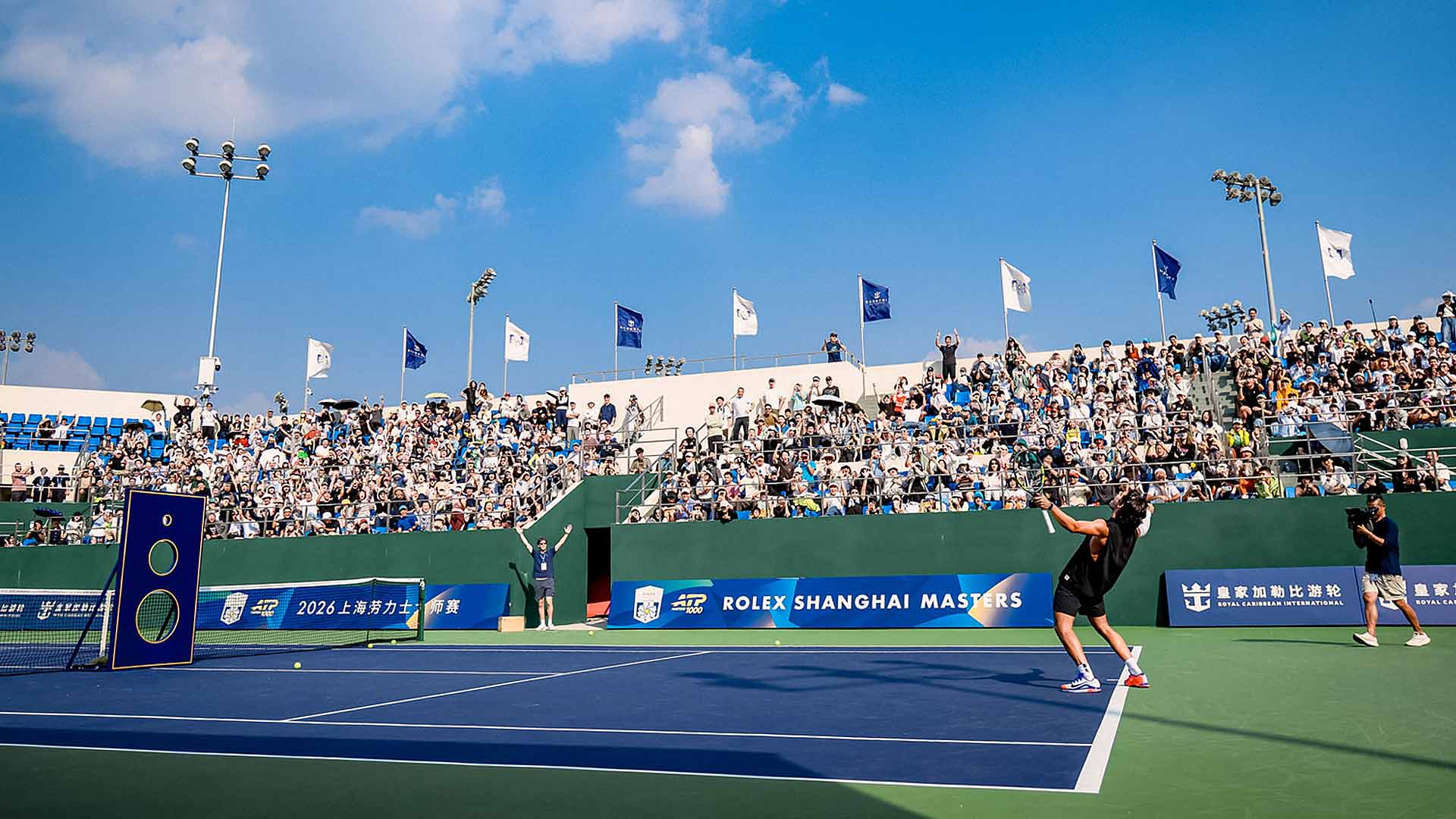
Carlos Alcaraz makes the 'impossible shot'!
I drink a lot of water so it was time for a quick bathroom break. I was stunned by how clean the restrooms were. There were even two attendants wiping down the sinks after fans washed their hands.
Just steps away from Court 17 is Grandstand 2, which last year had a roof put on it. General admission was enough to get me into this spectacular court to catch Karen Khachanov playing Adrian Mannarino. That’s a fun match-up, with KK’s game built around power pitted against Mannarino’s left-handed craftiness and guile.
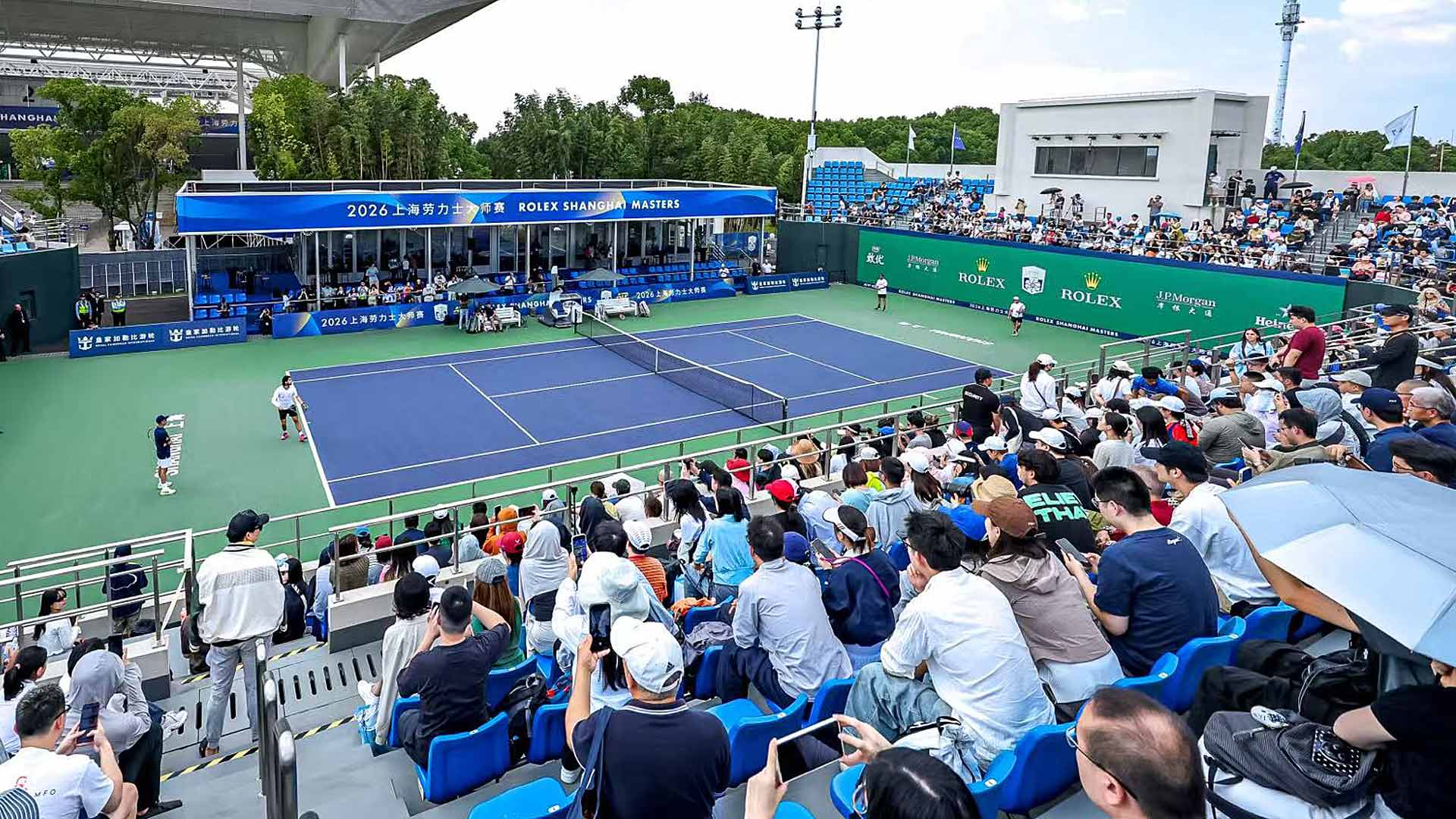
I could have chosen to sit closer to the court but decided to choose an upper seat to get the benefit of the shade from the open roof. I’m glad I did because I also got a spectacular view of the campus looking back towards Stadium Court.
After Khachanov extinguished the Frenchman’s second-set comeback, I was off again. Exiting the stadium, Chinese efficiency was again on show, with separate pathways for fans exiting and entering the stadium, making for good traffic flow.
While I took in the action on Grandstand 2, my friend Amy went autograph hunting, waiting in line to have Tsitsipas sign a ball commemorating his 400th career win the day before.
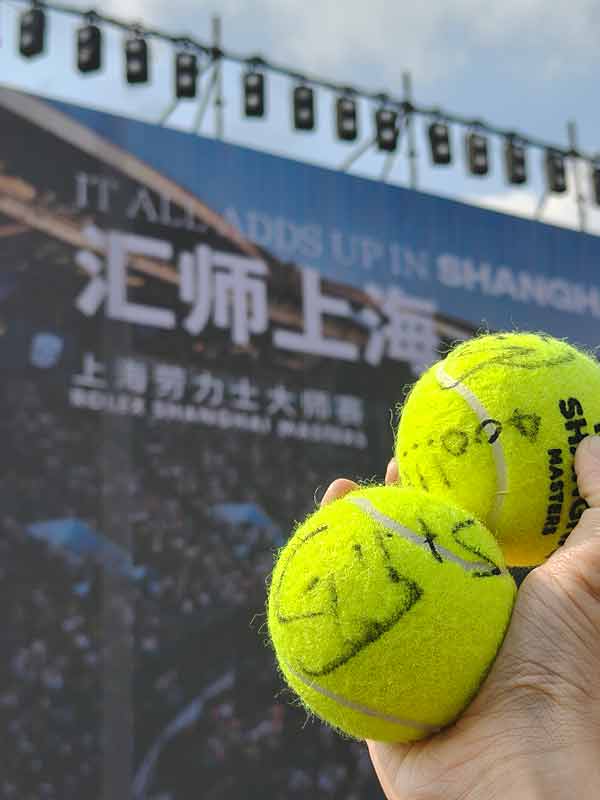
A Stefanos Tsitsipas-signed tennis ball after his 400th match win.
Just steps to my left I came across an incredible museum paying homage to the history of tennis in Shanghai, which dates back to 1996 when the first ATP Tour tournament was held in the city. Through photos, video and memorabilia, the museum traces all the highlights, including four Tennis Masters Cups in Shanghai before the creation of an ATP Masters 1000 event in 2009.
Walking back up another thoroughfare, Champions Avenue, I caught a glimpse of players practising on the outdoor courts. Chinese fans love getting up close to players and attending practice is a great way to do that.
Elsewhere, fans were doing what tennis fans do everywhere: stretching out in deck chairs in front of the big screen, grabbing something to eat between matches and comparing notes on where their favourite player might be practising next.
I want to remember my visit for years to come so I made a mandatory visit to the merchandise store. In keeping with efficient traffic flows, the entrance and exit are at opposite ends on the second floor of the official merchandise shop.
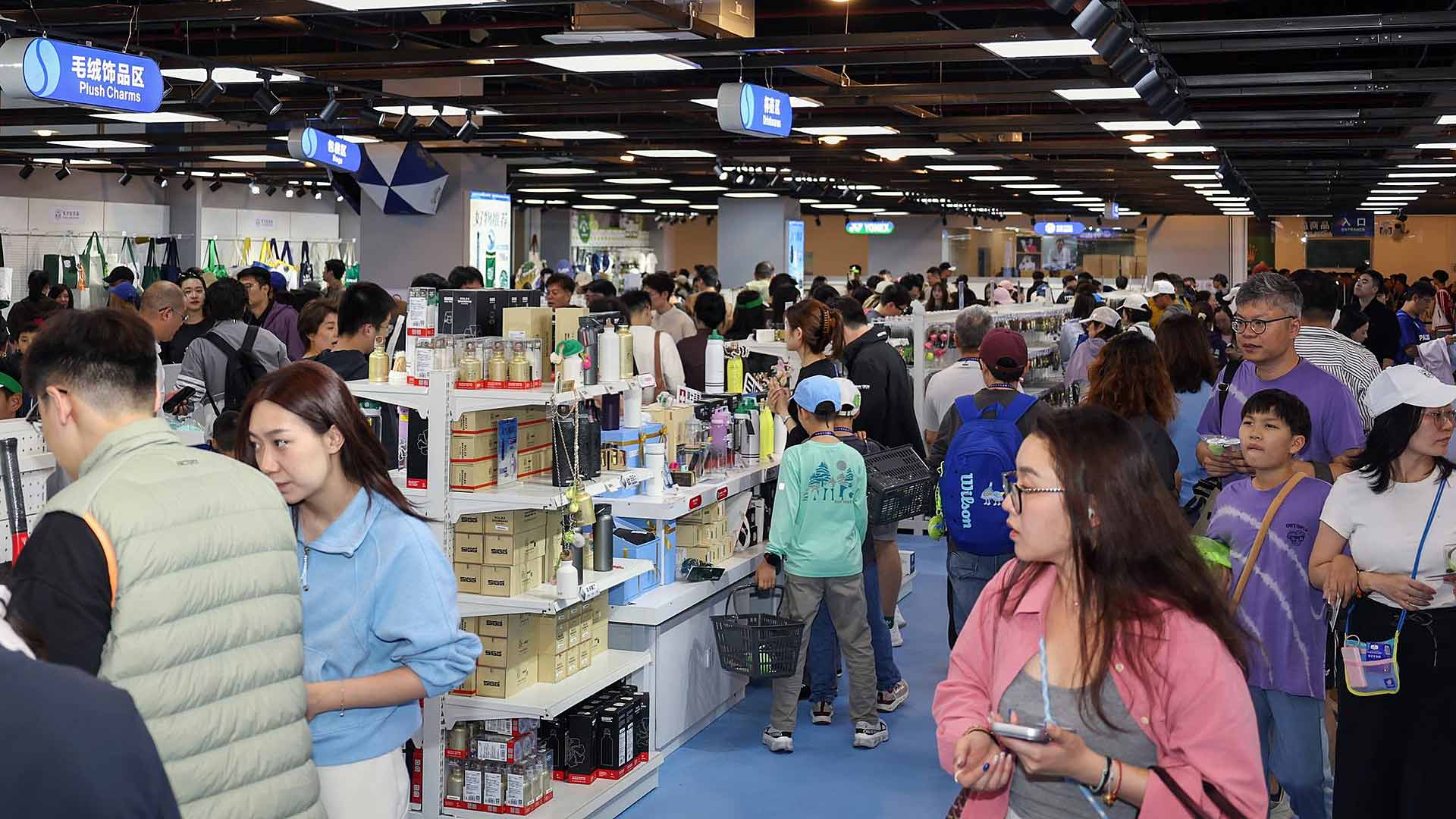
A brisk trade was underway when I visited the Retail Pavilion.
I must have counted 20 different towel designs, each one more colourful than the last. In addition to a tempting variety of the normal tournament hats, shirts and visors, my eye was taken by tournament-branded luxury bags, jewellery, scarves and, of course, the Chinese-inspired soft character toys that fans love so much.
The merch was great, but I was just as excited to use WeChat to pay for the first time. Before leaving home, I had wondered whether China’s cashless payment culture might be one of those little logistical hurdles that makes international travel complicated. It was the opposite. Once I had linked my credit card to WeChat, buying something was as simple as holding up my phone.
Time for a late lunch!
I headed to the food court and was determined to seek out a traditional Chinese offering.
I landed on Zuo Ting You Yuan, a well-known Chinese hot pot restaurant serving traditional Chaoshan beef hot pot. The beef was fresh, tender and tasty. I’m normally not a big vegetable guy, but these ones did not get moved to the side of my bowl.
Not speaking one word of Chinese, I had wondered before the trip how much of an obstacle the language barrier might be. A day at the tournament quickly put that concern to rest. Between English-speaking staff and volunteers, clear signage and the translation tools we all carry around on our phones these days, I never felt lost or unsure of what to do next.
Case in point is Greek native Dimitris Mathiopoulos, who was manning the prominent Information hub. Dimitris, who is studying at the Shanghai University of Sport, majoring in martial arts, answered every question I had. And I had plenty!
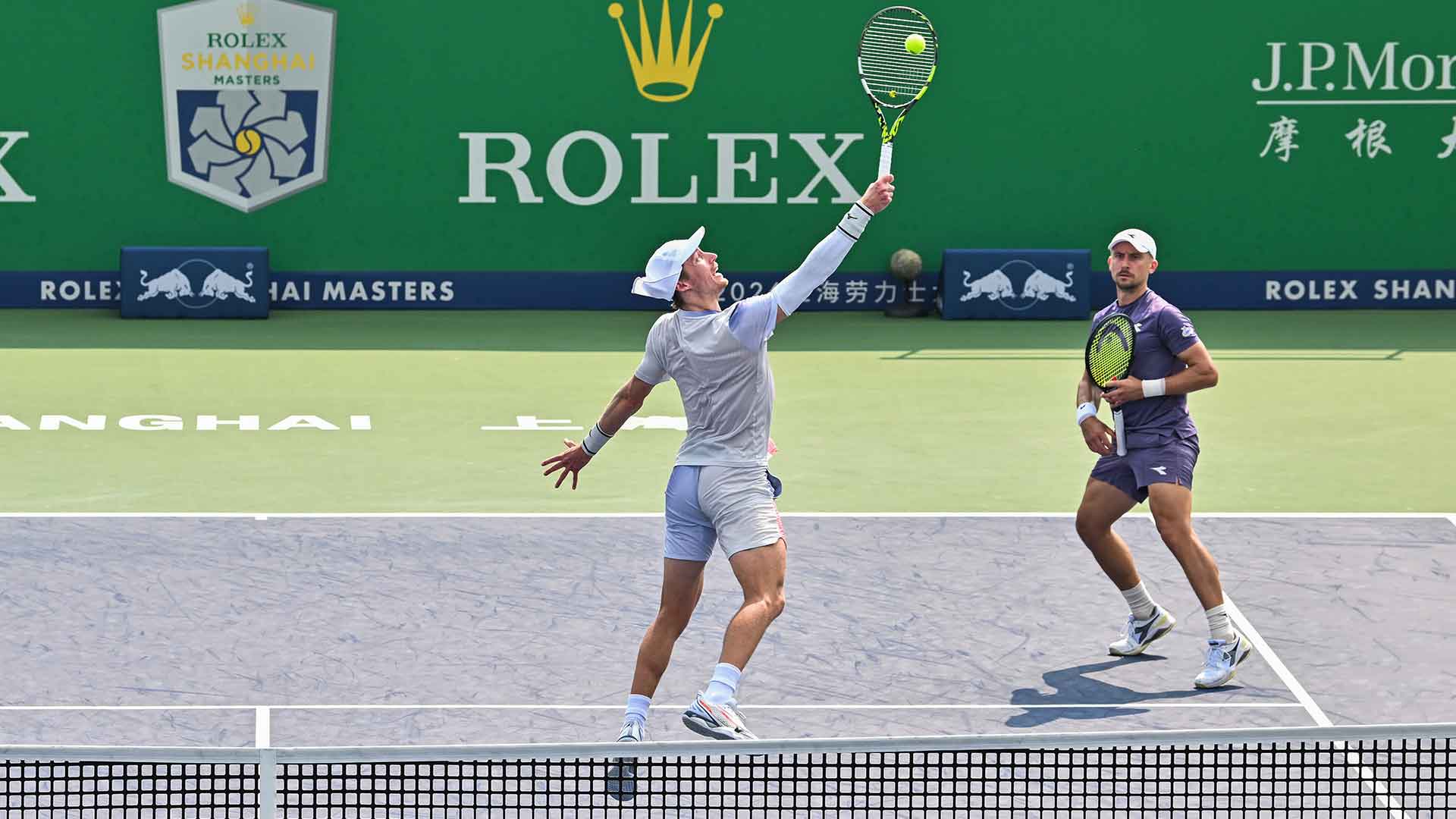
I'm a big doubles fan, so I headed to Court 3 to watch Austin Krajicek and Nikola Mektic upset the fourth seeds, Italians Simone Bolelli and Andrea Vavassori. The reflexes of these guys are unbelievable!
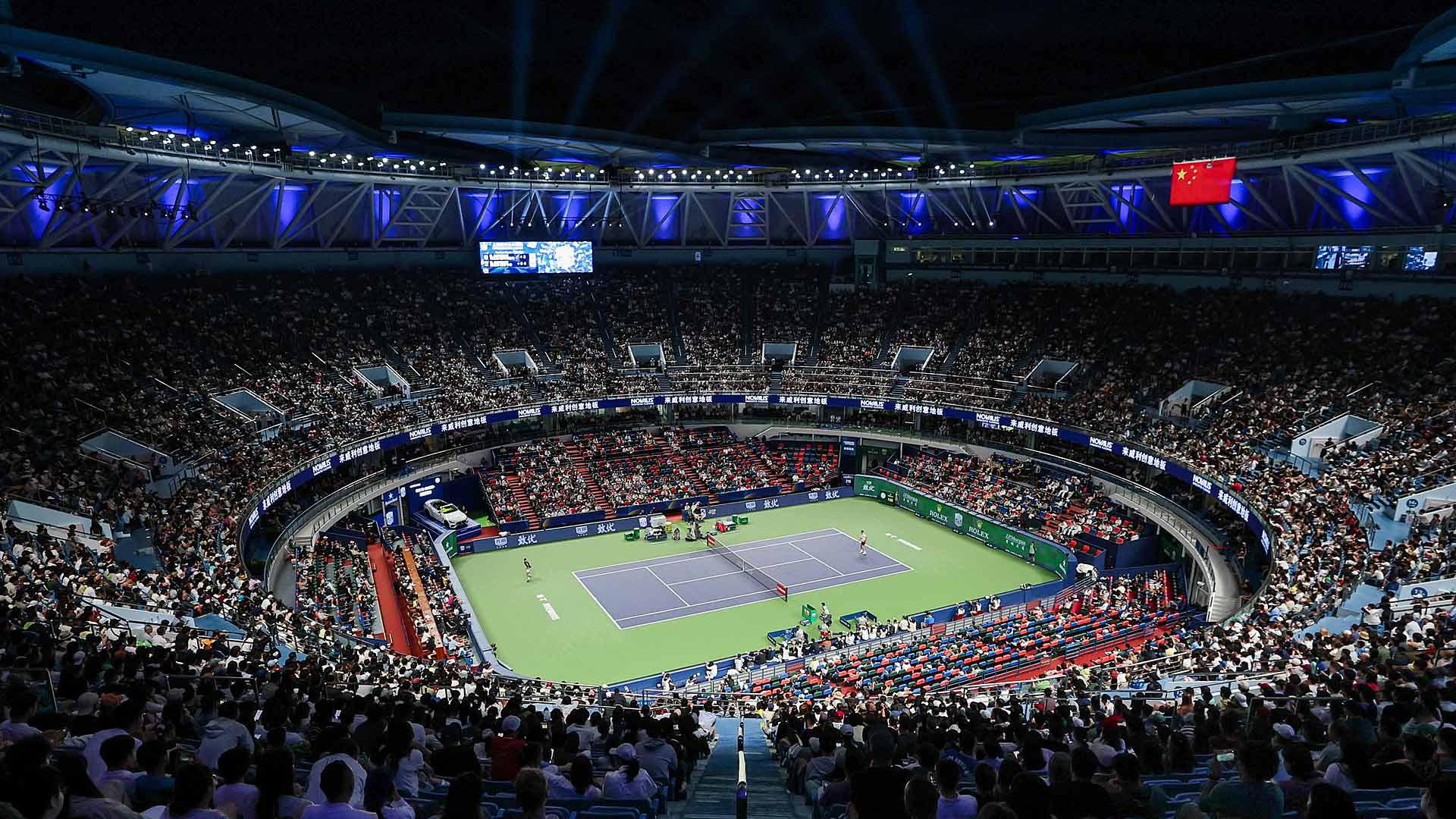
Qi Zhong Stadium is a spectacular site, day or night, roof open or closed.
Soon enough it was time to head to Qi Zhong Stadium, where my face didn’t let me down! Smooth passage to my seat in the upper bowl.
I was treated to two great three-setters, with top seed Alexander Zverev beating Quentin Halys and Alejandro Davidovich Fokina sneaking past Frances Tiafoe in a third-set tie-break late into the night.
It was a heck of a day, from watching practice and doubles at close range to enjoying great action on the beautiful Grandstand 2 and Stadium Court.
That may have been my biggest takeaway from the day. Coming to Shanghai gives a Western tennis fan all the excitement of experiencing a very different city and culture, without sacrificing any of the familiar rituals that make a day at the tennis so enjoyable.
The language may be different, the food may be different and the skyline certainly is. But the people racing to a practice court, chasing an autograph, debating who will win the next match or relaxing in front of the big screen? I know those people. They’re tennis fans.
And after one very full day at the Rolex Shanghai Masters, I felt right at home among them.
One thing I know for sure: I’ll be coming back for more.