


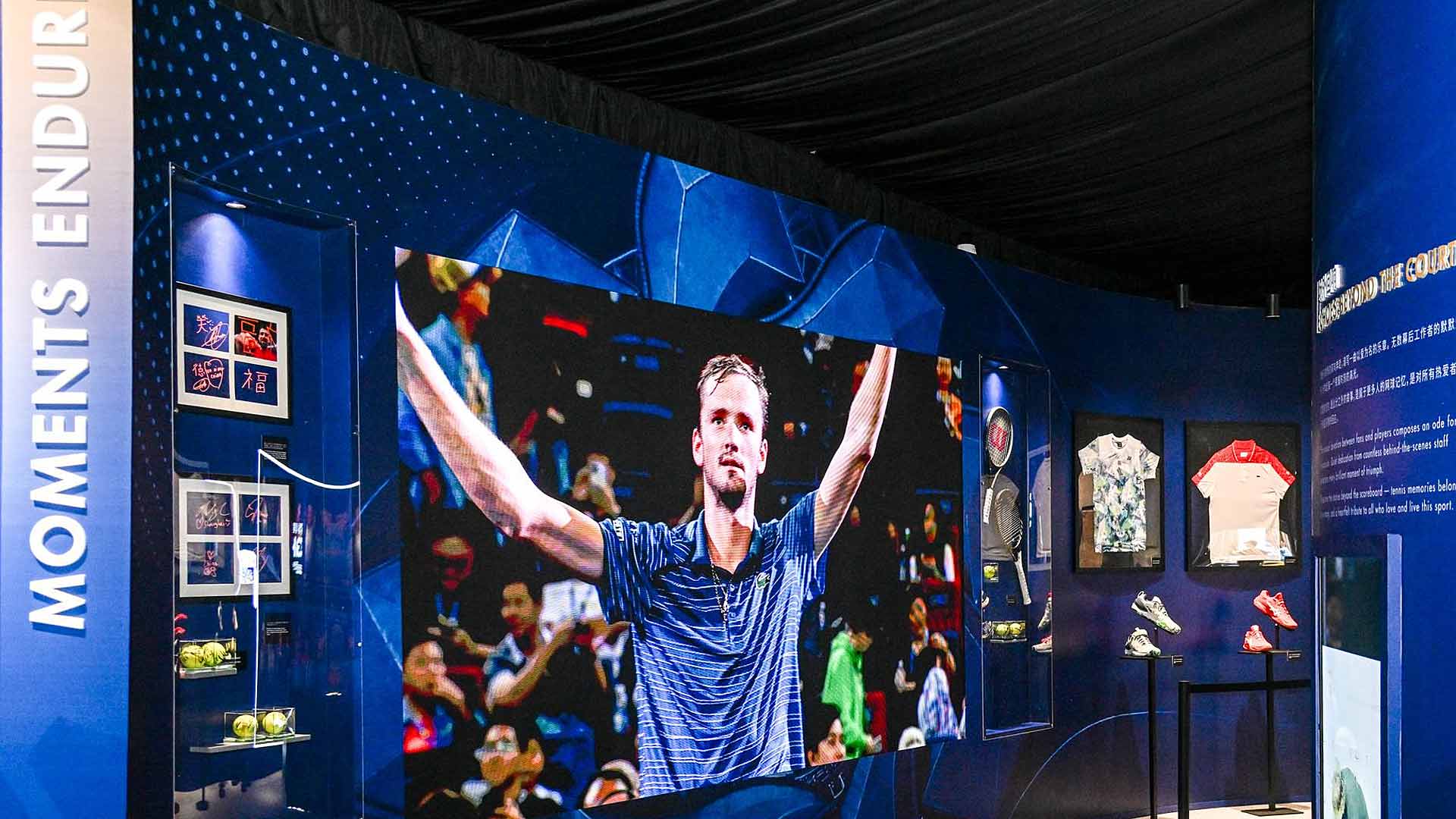
Every visitor to the Shanghai tennis museum at the Rolex Shanghai Masters has a favourite piece of memorabilia.
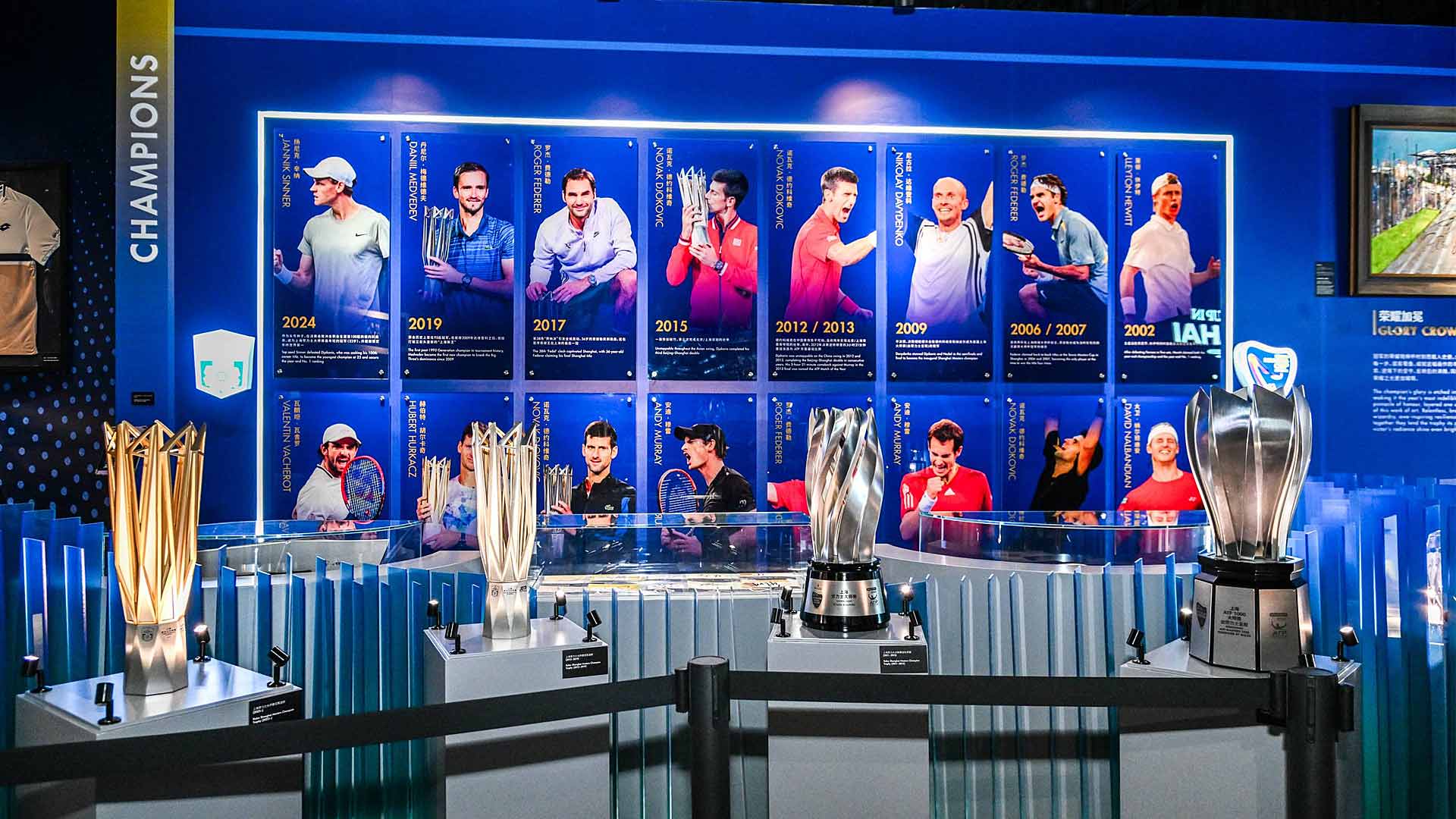
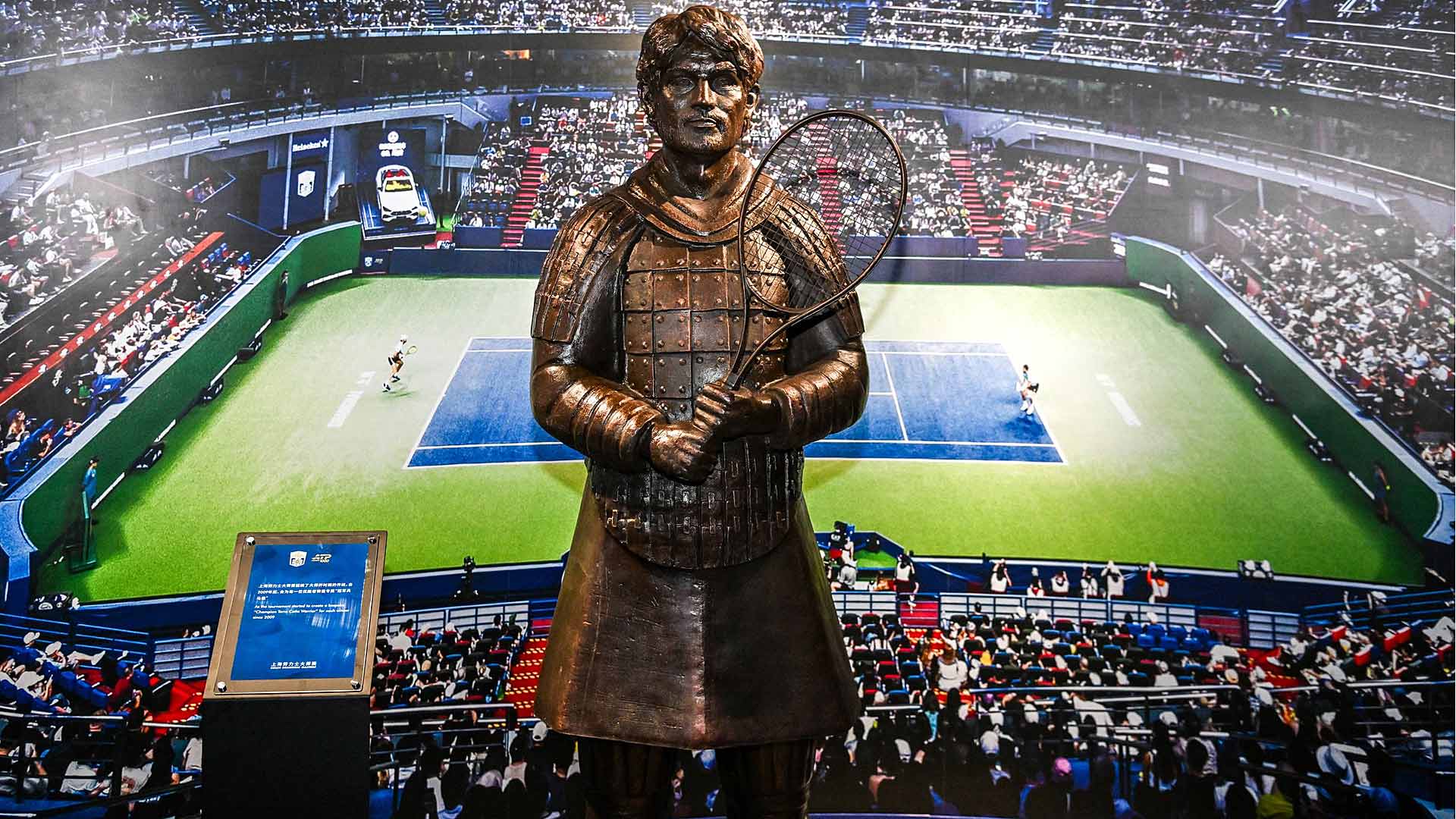
But two exhibits that generate extra attention are the Terracotta Warrior statues of former champions and the display of the four-stage evolution of the tournament trophy.
Not only has the design of the champion’s trophy changed over the years, it’s also deliberately become lighter. “When players finish the final they are very tired and the first trophies were very heavy. The newer trophies are easier to lift,” said museum guide Ai Zhu.
The two trophy iterations since 2013 both incorporate elements depicting Qi Zhong Stadium’s world-renowned eight-piece signature magnolia roof, Asia’s first retractable stadium roof that was inspired by Shanghai's city flower. In 2007 the stadium was awarded China's highest civil engineering honour, the Tien-yow Jeme Prize.
The museum celebrates both the tournament’s champions and classic moments and the history of tennis in Shanghai.
This year the new Terracotta Warrior statue of 2025 champion Valentin Vacherot sits alongside those of Jannik Sinner and Hubert Hurkacz. Statues have been created of all champions since the tournament’s inception in 2009.
Also new this year are racquets from Roger Federer and Alexander Zverev and a Rafael Nadal exhibition.
An unusual addition this year is the first ticket ever issued for the 2005 Tennis Masters Cup, donated by super fan Jianxin Xuan.
Jianxin attended the Shanghai Heineken Open in 1998 and then was here for the start of the Tennis Masters Cup era [2002 and 2005-08] and the Rolex Shanghai Masters from 2009 onwards. “I’ve come every single year without missing one,” he said.
Jianxin recalled how he secured ticket 0000001 to Tennis Masters Cup 2005 after arriving four hours before the box office opening.
“I remember that in 2005 the tickets went on sale at Times Square on Huaihai Road at 1 p.m. The queue hadn’t started but a security guard let me in. He said: ‘Take the stairs directly to the fourth floor, but don’t go anywhere else’.
“When I got to the official ticket office on the fourth floor, the staff were still busy setting everything up. There was nobody else around the ticket windows, so I simply sat down there. Someone who looked like an official came over and said ‘I think you’re going to be the first person to buy a ticket for the Shanghai Masters Cup.’
“And that’s how I got lucky. Thank heaven, thank God!”
During last year’s Rolex Shanghai Masters, former World No. 2 and 1998 Shanghai Heineken Open champion Michael Chang toured the museum with Tournament Director Michael Luevano.
The themed exhibition chronicles the start of Shanghai tennis from Chang’s title at the Shanghai ATP 250, which ran six editions from 1998-2004, skipping in 2002 when the Tennis Masters Cup was staged at the Shanghai International Expo Center.
Tennis Masters Cup returned for a four-year residency at the newly built Qi Zhong Tennis Center from 2005-2008 before the Rolex Shanghai Masters made its debut in 2009. This is the fourth year the tournament is being played as a 12-day, 96-singles player field, making it the biggest men's tournament in Asia.
The museum also caters for younger tennis fans with letters penned by former ballkids, including one by Shao Xulei.
“I was fortunate enough to take part in the Shanghai ball-kid selection programme in 2008 and was chosen to work at that year’s Tennis Masters Cup,” Shao wrote. “I still clearly remember our coach asking us during training: ‘What makes a good ball kid?’ The answer may be a little surprising: a good ball kid is an invisible ball kid.
“A good ball kid is invisible on court. They don’t block the spectators’ view or get in the way of the television cameras. They don’t suddenly appear where they shouldn’t. They don’t leave balls lying around the court for too long, put balls in the wrong place or make the players wait. They make sure the spectators barely notice the ball kids at all, because everyone’s attention remains on the players and every exciting rally.”
The museum sits near the entrance to Grandstand 2, the venue’s second biggest court which got a retractable roof of its own in 2025.